Opening Hours : Monday to Friday - 8am to 4pm
  Contact : 403-270-3192 x3

What is an Electrocardiogram (ECG)?

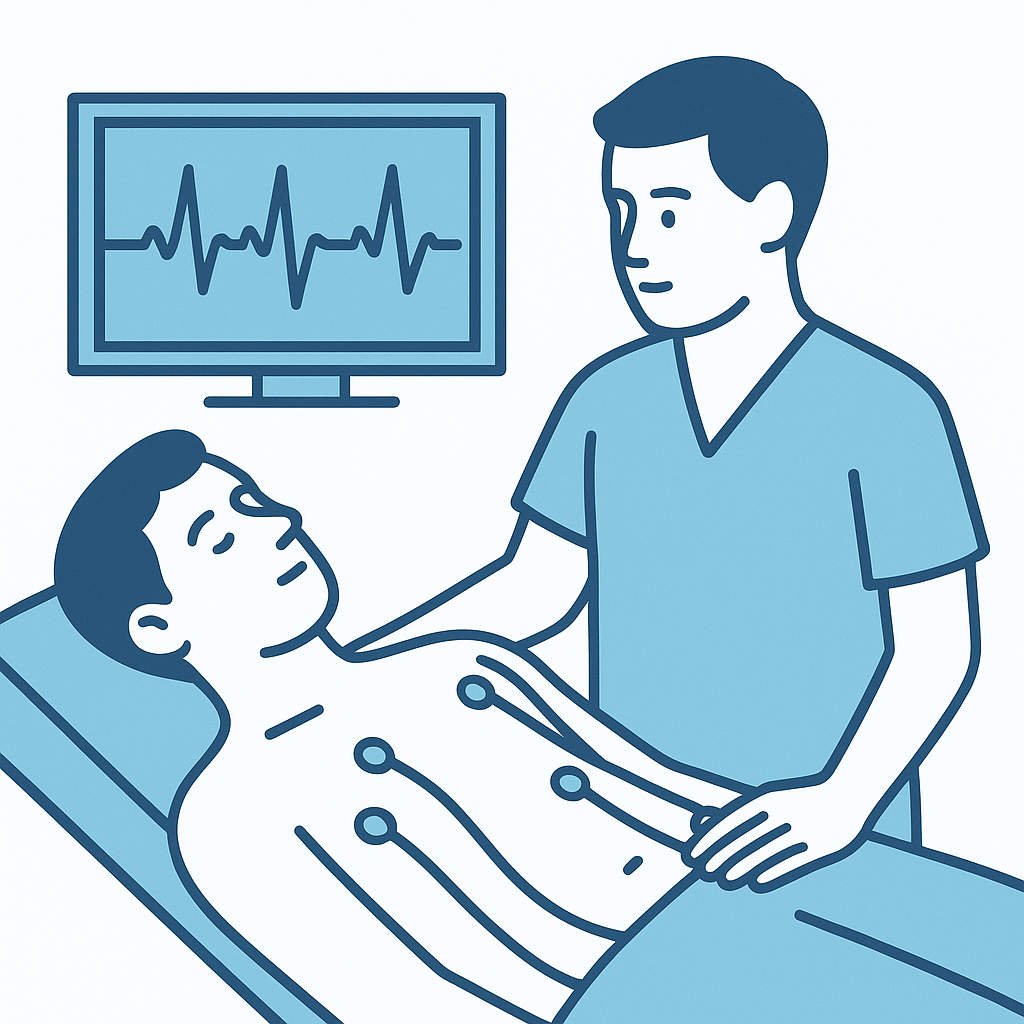
An electrocardiogram (ECG or EKG) is simple, non-invasive exam used to quickly evaluate the heart and its electrical signals. Small stickers, called electrodes, are placed across the chest as well as on each arm and leg in specific spots then connected to an ECG machine or program using ‘Lead” wires. The exam itself is relatively fast – in only a few short minutes we are able to measure and interpret the electrical impulses that coordinate the different parts of the heart and how it is contracting. It is the heart contracting that keeps blood flowing. The ECG assesses how fast the heart is beating, if the rhythm is steady or irregular, and the different timing of each contraction as they move throughout the heart.

ECGs are used to help screen for a variety of heart related conditions such as heart attacks, slow heart rhythms, arrhythmias (irregular heart beat), impaired blood supply to the heart muscle, chamber enlargement and more.

Why you might have an ECG include but are not limited to:

  • If you are experiencing chest pains or other symptoms of a possible heart related issue such as shortness of breath, lightheadedness, palpitations or fainting
  • To diagnose changes in the heart rhythm
  • To assess function of an artificial pacemaker
  • To check for abnormalities before surgery
  • Follow up from inflammation or infection in the heart valves
  • To check for possible damage to the heart caused by a heart attack, or when suspecting a possible heart attack
  • To determine the presence of hypertrophy of the heart chambers
  • Before starting new medication or dose changes of medications that affect the hearts conducting system
  • Baseline for future comparison or if there is family history of cardiac disease
  • Sometimes it is also mandatory for work sure as a pilots license
An illustration of an ECG being preformed

What do the result mean?

In certain instances, the ECG results may show a need for a follow up echo. Some more standard indications of this would be findings of chamber enlargement like Left or Right Ventricular Hypertrophy (LVH/RVH) or atrial enlargement. Abnormal rhythms can be cause for concern as well such as Atrial Fibrillation/Flutter and SVTs. Another good reason to follow up with an echo would be any findings indicative of a previous myocardial infarction (MI or heart attack) to determine if there truly was damage to the heart. It is important, of course, to remember that every patient and their findings are unique and what is right for one patient is not always the answer for another. All ECGs and should be discussed in depth with a doctor to see what, if any, follow up and after care is best for you

How to Prepare

∗ You may eat and drink as usual and take your medications.

∗ You should not use any cream, lotion, powder or oil on the day of the test.

∗ Dress simply on the upper half as you will be taking undressing from the waist up.

Other Services